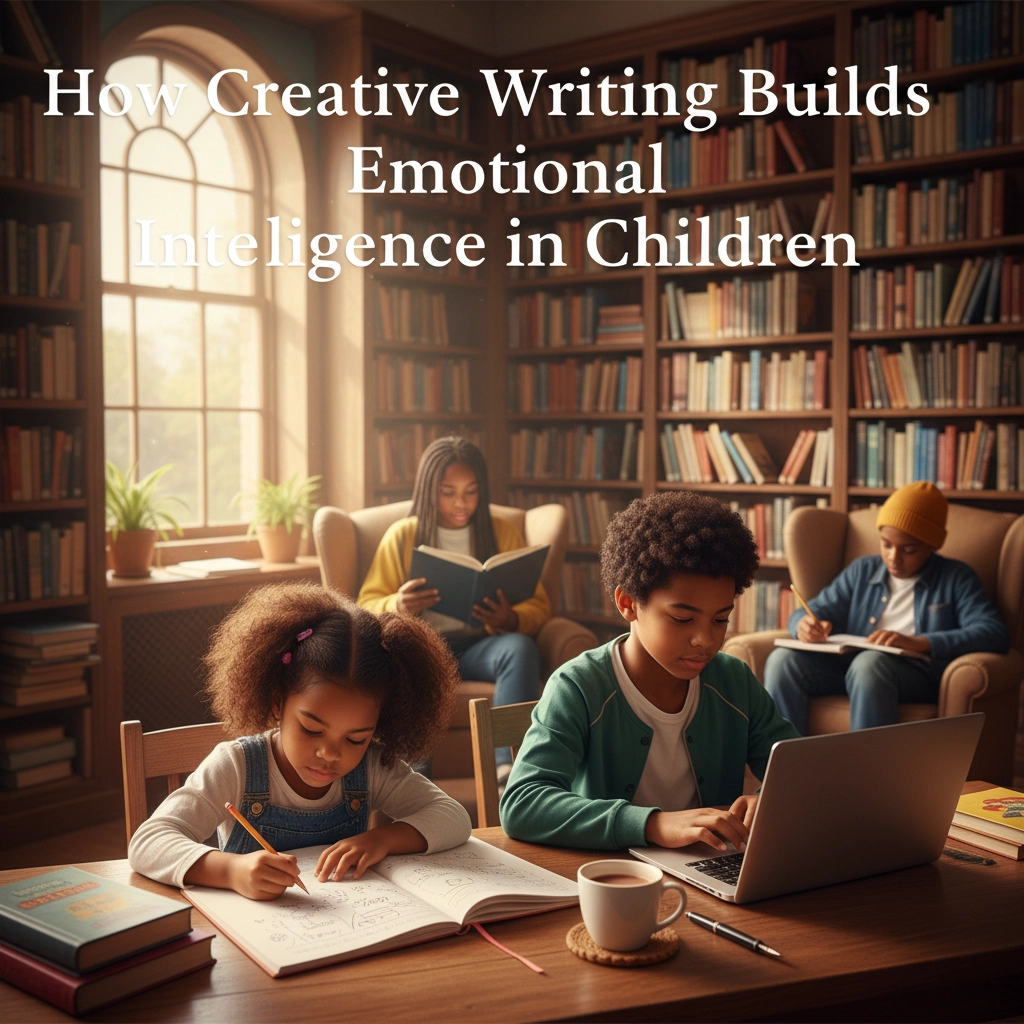
If you’ve ever watched a child light up while telling you a story they’ve written, you’ve witnessed something pretty magical happening. Beyond the obvious joy of creation, that young writer is actually developing one of life’s most valuable skills: emotional intelligence.
What does emotional intelligence actually mean? It’s your child’s ability to understand their own feelings, recognize emotions in others, and manage those feelings in healthy ways. It’s the difference between a kid who can say “I’m frustrated because this math problem is hard” versus one who just throws their pencil across the room.
And here’s the thing: creative writing for kids is one of the most powerful tools we have for building this crucial skill set.
Why emotional intelligence matters for children
Think about it: children who understand their emotions are better equipped to navigate friendships, handle disappointment, and communicate their needs effectively. They develop:
- Self-awareness: Knowing what they’re feeling and why
- Empathy: Understanding how others might feel in different situations
- Emotional regulation: Managing big feelings without melting down
- Social skills: Reading emotional cues and responding appropriately
These aren’t just “nice to have” skills: they’re fundamental life tools that will serve your child well into adulthood.

How creative writing becomes an emotional playground
When children write stories, something fascinating happens. They create characters who face challenges, experience different emotions, and work through problems. In doing so, they’re actually practicing emotional intelligence in a safe, imaginative space.
Let me give you a real example: Eight-year-old Maya was struggling with making new friends after moving to a new school. In my creative writing class for kids, she created a story about a lonely dragon who was afraid other animals wouldn’t like him because he looked different. Through writing this story, Maya explored her own feelings of isolation and fear: and by the end, she’d figured out that the dragon (and maybe Maya herself) needed to be brave enough to introduce himself to others. That’s emotional intelligence in action.
The magic of character development
When kids create characters, they’re forced to think beyond their own perspective. “What would make this character sad?” “How would they react to being left out?” “What does it feel like to be the new kid in class?”
This isn’t just creative exercise: it’s empathy boot camp. Children learn to:
- Step into someone else’s shoes
- Consider different viewpoints
- Understand that people react differently to similar situations
- Recognize that everyone has feelings, fears, and motivations
As a children’s writing coach, I guide children through this process, asking questions like “How do you think your character feels right now?” or “What would you do if you were in their situation?” These conversations naturally develop emotional awareness.

Writing as emotional expression
Children don’t always have the words for what they’re feeling. Sometimes they’re angry but don’t know why. Other times they’re sad but can’t explain it. Creative writing gives them a vocabulary for their inner world.
Through storytelling, children learn to:
- Name different emotions beyond just “happy,” “sad,” and “mad”
- Describe feelings in more nuanced ways
- Express complex emotions safely through fictional characters
- Process difficult experiences by writing about them
I’ve seen children work through everything from parental divorce to pet loss through their stories. It’s remarkable how a child who struggles to talk about their feelings can pour their heart onto paper when it’s “just a story.”
The power of journaling and personal narrative
Not all creative writing for kids has to be fiction. Personal journaling and essay writing can also be incredibly powerful for emotional development. When children write about their own experiences: even mundane ones: they develop self-reflection skills.
Simple prompts like “Write about a time you felt proud” or “Describe a moment when you were really frustrated” help kids:
- Process their experiences
- Identify patterns in their emotions
- Develop self-awareness
- Practice articulating their feelings
Sharing stories builds connection
When children share their stories in a writing class for kids or with family, they discover they’re not alone in their feelings. That story about the anxious rabbit? Turns out three other children in class have written about worried characters too.
This sharing process teaches kids that:
- Everyone experiences difficult emotions
- It’s normal and okay to feel scared, sad, or angry sometimes
- Others can relate to their experiences
- Talking about feelings can help us feel less alone
An experienced book writing coach knows how to create safe spaces for this kind of sharing, fostering both individual growth and group connection.
Problem-solving through plot development
When children write stories, they inevitably create problems for their characters: and then have to figure out how to solve them. This is executive function and emotional regulation practice disguised as fun.
Kids learn to:
- Think through consequences before acting
- Consider multiple solutions to problems
- Understand cause and effect relationships
- Develop resilience when first solutions don’t work
I remember one student who wrote story after story about characters facing bullies. Through various plot developments, she explored different ways to handle difficult social situations: from asking for help to standing up for herself to finding new friend groups. By the time she finished her fifth “bully story,” she’d practically written herself a handbook for navigating social challenges.

The role of conflict and resolution
Every good story needs conflict, and working through story conflicts teaches kids emotional problem-solving. They learn that:
- Problems are part of life (even in stories)
- There are usually multiple ways to handle difficult situations
- Characters can grow stronger through challenges
- Happy endings are possible, even after difficult times
This is hope-building disguised as storytelling: and it’s incredibly powerful for a child’s emotional development.
Online options make it accessible
The beautiful thing about modern creative writing courses is that they’re more accessible than ever. An online writing class can connect your child with other young writers from around the world, exposing them to different perspectives and experiences. These virtual communities often become safe spaces where kids can share their work, give and receive feedback, and develop both their writing skills and emotional intelligence simultaneously.
If you’re considering enrolling your child in creative writing activities, here are some things to keep in mind:
- Look for programs that emphasize both craft and emotional exploration
- Find instructors who understand child development
- Seek out opportunities for sharing and feedback
- Choose programs that celebrate different types of stories and voices
- Consider the balance between structure and creative freedom
The goal isn’t to create the next literary genius (though that would be nice). It’s to give your child tools for understanding themselves and others.

The long-term impact
Children who develop emotional intelligence through creative writing often become adults who:
- Communicate more effectively in relationships
- Handle stress and setbacks with greater resilience
- Show increased empathy and understanding of others
- Express themselves more clearly and confidently
- Problem-solve more creatively and thoughtfully
These aren’t small gifts: they’re life-changing skills that will serve them well in every aspect of their future.
Ready to get started?
If this resonates with you, I’d love to help your child discover the emotional power of storytelling. Whether through one-on-one coaching sessions where we can focus on your child’s specific interests and needs, or through our Creative Writing Club for Kids and Teens where they can connect with other young writers, there are wonderful opportunities to nurture both their creativity and emotional intelligence.
Creative writing isn’t just about putting words on paper: it’s about helping children understand their hearts and minds in deeper, more meaningful ways. And honestly? There’s nothing more important we can teach them than that.
Ready to learn more about how creative writing courses can support your child’s emotional growth? Let’s chat about the perfect program for your budding writer. Visit our Creative Writing Club for Kids and Teens page to discover how we can help your child develop both their writing skills and emotional intelligence in a supportive, encouraging environment, and sign up for a FREE trial! Or schedule a call with me to answer any questions you may have.
I look forward to working with your child.