
When my nine-year-old student told me she felt “powerless” after her parents’ divorce, it stopped me in my tracks. Here was a child using language that belonged in therapy sessions, not playground conversations. But here’s what struck me most: she wasn’t just describing her feelings, she was actively seeking ways to regain control over her story.
That conversation got me thinking about agency, particularly how children experience it. Agency isn’t just a fancy psychology term; it’s about feeling like you have a say in your own life. For children navigating everything from family changes to school pressures, that sense of control can feel frustratingly out of reach.
Storytelling becomes revolutionary by transforming children from passive recipients of whatever life throws at them into active authors of their own narratives.
From passenger to driver
Think about traditional approaches to helping children process experiences. We ask them questions, we listen, we validate. All important, yes. But storytelling flips the script entirely. Instead of being interviewed about their lives, children become the storytellers.
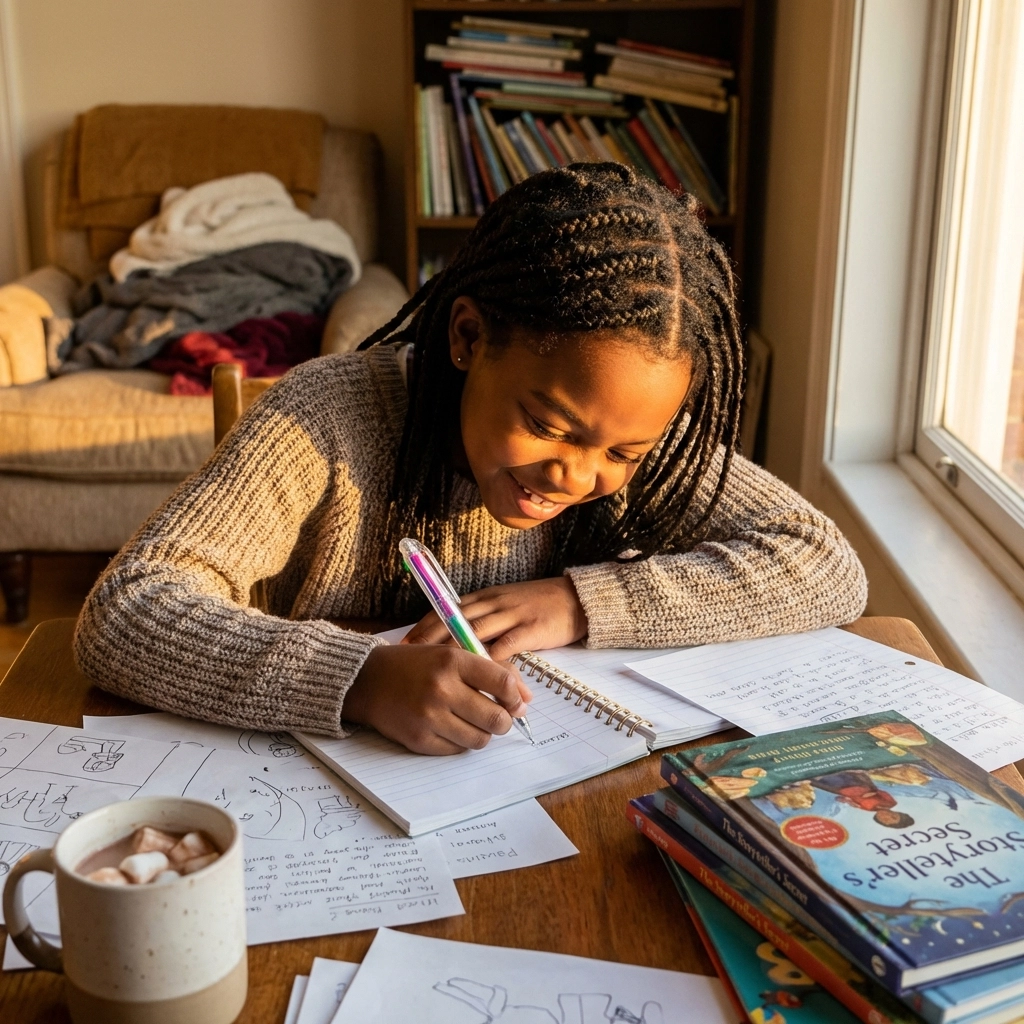
When a child creates a story, whether it’s about a brave princess, a misunderstood dragon, or a kid who saves the day, they’re not just entertaining themselves. They’re practicing agency. They’re making choices about plot, character, and outcome. Most importantly, they’re discovering that they have the power to shape narratives.

I’ve seen this transformation repeatedly in our creative writing club at Accomplish Press. Last year, we worked with Maya, a twelve-year-old who’d been struggling with anxiety about starting at a new school. When she first joined our program, she barely spoke during group discussions. But give her a blank page and suddenly, stories poured out of her.
Her characters always seemed to find themselves in unfamiliar places, new kingdoms, alien planets, mysterious schools. But here’s the thing: they never stayed scared for long. Maya’s protagonists developed strategies, made friends, discovered hidden strengths. Through her stories, Maya wasn’t just processing her fears, she was rehearsing solutions.
The three pathways to agency
Research shows us that storytelling helps children reclaim agency through three key mechanisms, and I see these play out constantly in my work with young writers.
Being proactive – When children create stories, they naturally put their characters in challenging situations and then figure out how to resolve them. This isn’t just creative exercise, it’s problem-solving practice. A child writing about a character lost in a forest has to think: What would I do? How would I find my way home? What resources could I use?
This forward-thinking approach carries over into real life. Children who regularly engage in storytelling develop what I call “what if” thinking. They’re more likely to consider multiple scenarios and prepare mental strategies for handling difficulties.
Gaining voice – Here’s something beautiful about storytelling: there’s no wrong way to do it. Unlike math homework or spelling tests, stories don’t have predetermined correct answers. This freedom gives children space to express thoughts and emotions they might struggle to communicate directly.
I remember working with ten-year-old James, whose parents were going through a messy separation. He couldn’t talk about his feelings, but his stories were full of characters trying to reunite their divided kingdoms. Through his fictional worlds, James was processing his reality while maintaining emotional safety.
Building community – Stories are inherently shareable, and when children share their narratives, something magical happens. Other children recognize pieces of their own experiences reflected back. Suddenly, the child who felt alone in their struggle realizes they’re part of a larger community of storytellers, all navigating their own challenges.
The practical magic: how to foster agency through stories
If you’re a parent or teacher wondering how to harness this power, here are approaches that actually work.
Start with feelings, not plots
Instead of asking “What happened today?” try “If today was a character in a story, what kind of character would it be?” This simple shift moves children from reporting events to interpreting experiences.
Embrace multiple formats
Not every child is a natural written storyteller, and that’s perfectly fine. Some children express themselves through drawing comic strips, others through dramatic play, others through songs or spoken stories. The medium doesn’t matter, the agency-building happens regardless.
Ask better questions
When a child shares a story, resist the urge to correct or improve it. Instead, ask questions that help them explore their own narrative choices: “Why did your character decide to do that?” “What other options did they consider?” “How did that choice change the story?”
Create safe spaces for difficult stories
Some of the most powerful agency-building happens when children can explore challenging themes through the safety of fiction. A child dealing with bullying might create stories about misunderstood monsters. A child processing grief might write about characters saying goodbye to magical creatures.
These aren’t topics to shy away from: they’re opportunities for children to practice handling difficulty while maintaining emotional safety.
What this looks like in practice
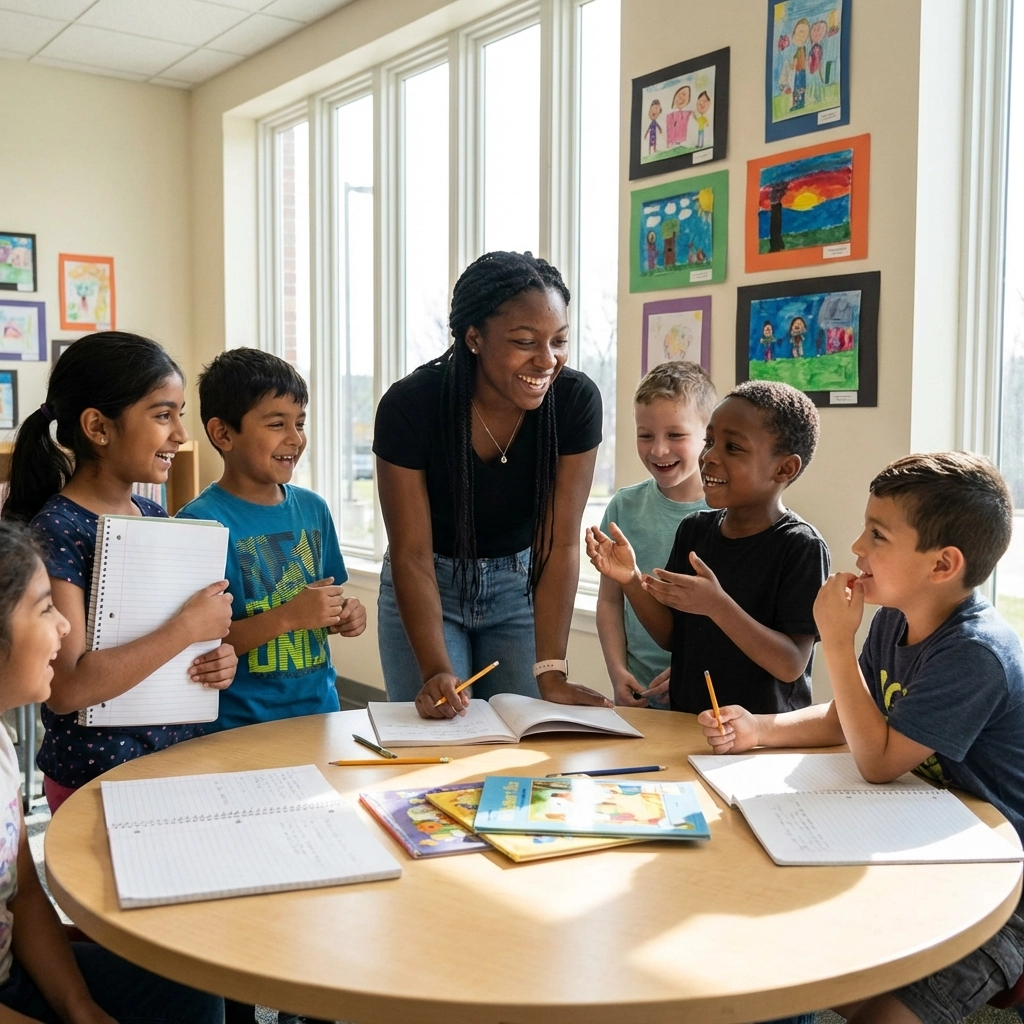
In our Creative Writing Club, we’ve seen remarkable transformations when children are given consistent opportunities to engage with storytelling as agency practice.
There was Sophie, whose family had recently moved countries and who felt like she didn’t belong anywhere. Her stories consistently featured characters who were travellers, always carrying special objects from home that gave them strength in new places.
Then there was Alex, who struggled with feeling different from his classmates. His protagonists were often unusual creatures who initially tried to hide their differences but eventually learned that their unique qualities made them heroes.
What struck me wasn’t just the creativity of their stories, but how each child unconsciously used storytelling to work through their specific challenges while building confidence in their ability to navigate difficulty.
Beyond the page – agency in daily life
The beautiful thing about storytelling as agency practice is how it spills over into real life. Children who regularly engage in creative writing begin to see themselves as capable of influencing outcomes, not just in their fictional worlds but in their actual experiences.
They start asking different questions: “What if I tried this approach?” “How else could this situation unfold?” “What would my character do here?” This isn’t escapism: it’s preparation.
When my student, the one who felt powerless after her parents’ divorce, started writing stories about characters navigating family changes, something shifted. Her stories gave her language for feelings she couldn’t previously articulate. More importantly, they gave her practice in imagining different outcomes and exploring her own resilience.
The long game
Agency is not something you either have or don’t have. It’s a muscle that strengthens with practice. And storytelling is one of the most natural and enjoyable ways for children to get that practice.
Every time a child creates a story, they’re exercising choice. Every time they navigate their character through conflict, they’re building problem-solving skills. Every time they share their story and see it resonate with others, they’re discovering their own voice and influence.
This isn’t magic: it’s practice. But the results can feel magical when you see a child move from feeling like things happen to them to understanding that they have the power to shape what happens next.
As someone who’s dedicated my career to helping writers find their voice, I’ve learned that this journey often begins much earlier than we think. It starts when children first discover that they can be the authors of their own stories, both on the page and in life.
If you’re inspired to help the young writers in your life discover the power of storytelling, I’d love to work with you. Whether you’re looking for one-to-one coaching for your child or considering our creative writing club designed specifically for young storytellers, I’m here to guide that journey. Because every child deserves to feel like the author of their own story: and sometimes, they just need the right support to pick up that pen.