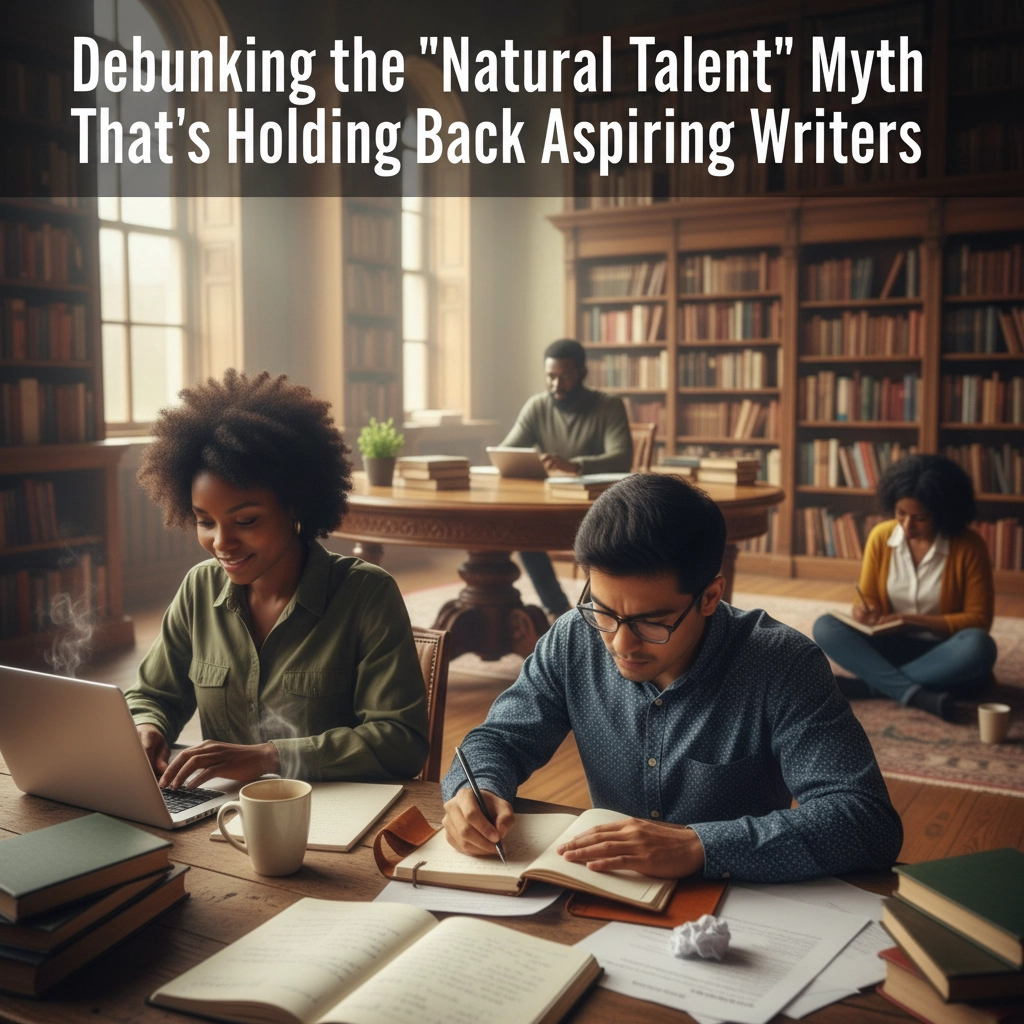
I hear this way too often: “I’d love to write, but I just don’t have the talent for it.” Or my personal favourite: “My kid loves stories, but they’re not naturally gifted like other children.”
The “natural talent” myth is probably the biggest load of nonsense holding back aspiring writers today. Whether you’re dreaming of writing your first novel or wondering if your child should try that creative writing class, it’s time we had an honest conversation about what writing ability actually is.
The appeal of the talent myth
Believing in natural talent feels good, doesn’t it? When we read a stunning piece of writing, it’s psychologically easier to think, “Wow, they’re just gifted,” rather than, “They probably rewrote that opening paragraph seventeen times and spent years learning their craft.”

We love stories about prodigies. The eight-year-old who writes poetry that makes adults weep. The debut novelist who seems to have appeared fully formed. But what we don’t see is: the extensive practice happening behind the scenes, the years of reading voraciously, the quiet hours spent scribbling in notebooks when no one was watching.
The myth persists because talent can seem inexplicable, and we’re drawn to mysteries. But just because we can’t see all the work doesn’t mean it isn’t there.
Why this myth is destructive
The talent myth doesn’t just discourage people, it actively sabotages them. I’ve seen too many brilliant potential writers give up before they even start because someone once told them they “weren’t the writing type.”
In schools, kids get labelled as “natural writers” or placed in “basic” writing classes, and guess what happens? The “basic” kids internalize the message that they’re somehow deficient, while the “gifted” ones live in terror of making a mistake that might reveal they’re frauds.
It becomes a self-fulfilling prophecy. If you believe you lack writing talent, you avoid challenges, skip practice, and quit at the first sign of difficulty. Your lack of improvement then “proves” you were right all along. It’s a vicious cycle that keeps potentially amazing writers on the sidelines.
What science actually says about talent
Researchers have been studying this for decades, and the evidence is crystal clear: talent is developed, not inborn.
Dr. K. Anders Ericsson’s ground-breaking work on deliberate practice shows that excellence comes from sustained, focused training, not genetic gifts. Even Michael Jordan, arguably the most “naturally talented” athlete ever, wouldn’t have been Michael Jordan without years of obsessive practice.

Here’s the key insight that changes everything: talent is just a measure of skill at a particular moment in time. It’s not fixed. You can become more skillful, and therefore more “talented”, through deliberate effort.
Think about it this way: when you see a “talented” writer, you’re not seeing someone with magical DNA. You’re seeing the accumulated result of practice, feedback, learning, and persistence. The gap between them and a struggling writer isn’t an unbridgeable chasm, it’s simply time and focused effort.
Writing is a skill, not a divine gift
Writing isn’t some mystical art bestowed by the muses, it’s a skill, just like playing piano or shooting free throws.
When a musician hits a wrong note, they don’t think, “Guess I’m not musical.” They practice that passage again. When a basketball player misses a shot, they don’t conclude they lack athletic genes, they work on their form.
Yet writers? We write one bad paragraph and decide we’re hopeless. It’s ridiculous when you think about it.
What this means for you (and your child)
If you’re an aspiring writer reading this, here’s your wake-up call: your current struggles aren’t evidence of missing talent, they’re evidence you haven’t put in enough deliberate practice yet. And that’s perfectly okay! Every writer who seems “naturally gifted” went through exactly what you’re going through now.
For parents wondering about creative writing for kids: your child doesn’t need to be the next literary prodigy to benefit enormously from writing. A writing class for kids or working with a kids writing coach isn’t about discovering hidden talent, it’s about developing a skill that will serve them for life.

Here’s what actually matters:
Consistent practice. Not perfect practice, consistent practice. Write regularly, even when (especially when) it feels hard.
Feedback and community. Working with a writing coach or joining a creative writing course isn’t admitting defeat, it’s accelerating your learning curve.
Persistence through the messy middle. Every writer faces this phase where everything feels terrible. It’s not a sign you lack talent; it’s a sign you’re learning.
Reading like a writer. The more you read in your genre, the more your brain absorbs patterns, rhythms, and techniques.
Overcoming the myth in real life
So how do you actually move past this limiting belief? Start by recognizing that any past messages about your writing ability, whether you were praised as “gifted” or dismissed as “not a writer”, were reflecting temporary skill levels, not permanent truths.
Your seventh-grade teacher who said you “weren’t creative”? They were wrong. The college professor who told you to consider a different major? Also wrong. These judgments say nothing about your potential, only about where you were at that specific moment.
Second, embrace the learning process. Your current struggles with character development or plot structure aren’t personal failings, they’re simply skills you haven’t mastered yet. The solution isn’t to accept limitations; it’s to get better at the craft.
The real secret? It’s all about the work
Here’s what successful writers know that struggling writers don’t: there is no secret ingredient. No special gene. No mystical talent that some people have and others lack.
There’s just the work. And the willingness to do it consistently, even when it’s hard, even when you feel like you’re not “naturally good” at it.
Whether you’re considering an online writing class, thinking about working with a book writing coach, or just wondering if you have what it takes, the answer is yes, you absolutely do. Not because you have some special gift, but because writing is learnable, and you’re capable of learning it.

The writers who seem most “talented” are simply the ones who’ve put in the most deliberate practice. They’ve sought feedback, studied their craft, and persisted through the inevitable periods of feeling like they’ll never get it right.
That’s available to all of us. Talent isn’t the barrier: believing in talent is.
Your next step forward
If you’ve been holding yourself back because you think you lack natural writing ability, it’s time to stop. Whether you’re dreaming of writing fiction, memoir, or helping your child discover the joy of storytelling, the path forward is the same: start writing, keep learning, and trust the process.
Ready to develop your writing skills with proper guidance and support? I’d love to help you on this journey. Whether you’re interested in one-on-one coaching to tackle your specific writing challenges, or you’d prefer the community and structure of our Creative Writing Course, there’s a path that’s right for you. Because you don’t need talent to be a writer (you just need to begin.)