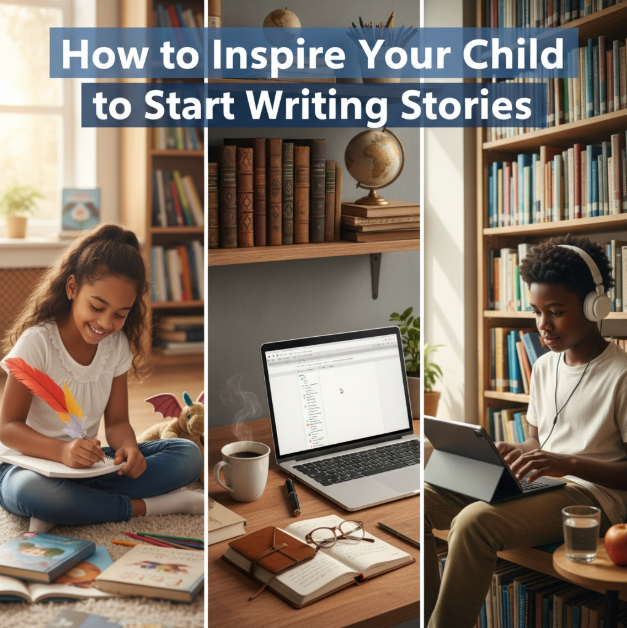
Getting kids excited about creative writing doesn’t require fancy tools or complicated lesson plans. The secret lies in making storytelling feel like play rather than work, and showing children that their ideas: no matter how silly or outrageous: are worth putting on paper.
Whether your child is naturally drawn to books or seems more interested in video games and sports, every kid has stories inside them waiting to come out. As parents and carers, we have the power to unlock that creativity and help our children discover the joy of bringing their imaginations to life through words.
Create a writing-friendly environment at home
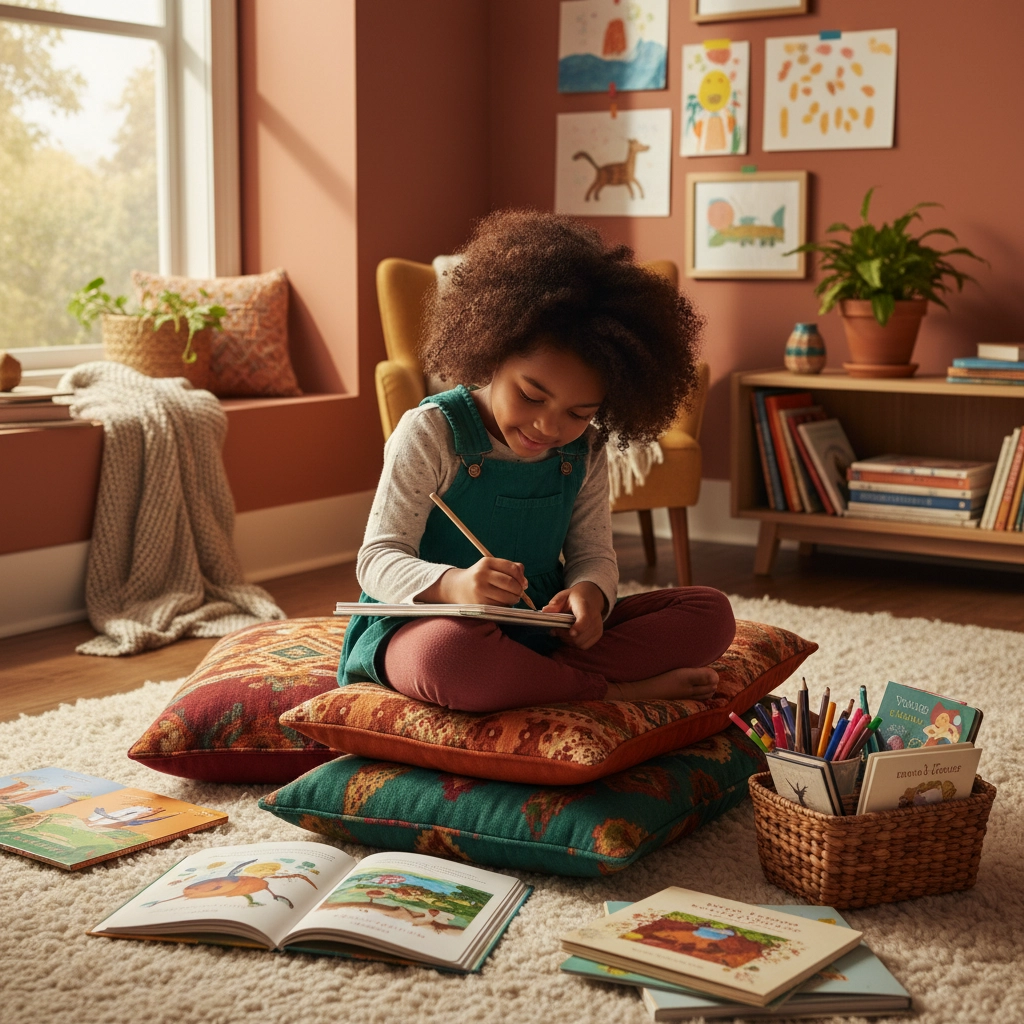
The first step in inspiring young writers is making writing materials easily accessible throughout your home. Keep notebooks, scrap paper, coloured pens, and pencils in multiple locations where your child spends time. When inspiration strikes: and it often does at unexpected moments: you want them to be able to grab something and start writing immediately.
Consider setting up a cozy writing corner, similar to a reading nook, where your child can retreat when they want to create. This doesn’t need to be elaborate: a comfortable cushion, good lighting, and a small basket of writing supplies can transform any quiet corner into a creative sanctuary.
Establish regular, ungraded writing time. This is crucial for developing a love of creative writing for kids. Set aside 15-20 minutes a few times a week where writing happens without any pressure about spelling, grammar, or finishing stories. During this time, you can sit with your own journal and write alongside your child, showing them that writing is something enjoyable that adults do too.
Make writing social and interactive
One of the most effective ways to inspire children to write is to join them in the process. Write together as a family, creating the most outrageous and funny stories you can imagine. When kids see adults having genuine fun with storytelling, they naturally want to participate.
Try these interactive writing games:
- Dialogue tag: Write a conversation between characters by passing a paper back and forth, with each person responding as a different character
- Story dice: Use dice with pictures or words to generate random story elements
- Collaborative storytelling: Start a story with one sentence, then have your child add the next, continuing back and forth
- Character conversations: You write as one character, your child responds as another: keep it funny and engaging
These activities help children see that creative writing is a social, enjoyable activity rather than a solitary chore. Plus, the collaborative aspect takes pressure off them to create everything themselves.
Use prompts and inspiration
When your child feels stuck, offer gentle prompts rather than forcing ideas. Keep a collection of story starters in a jar or bowl they can draw from when inspiration runs low:
- “Write about someone who is the complete opposite of you”
- “Describe your favourite place and what makes it special”
- “What would happen if animals could talk for just one day?”
- “Write a new ending for your favourite book”
- “Tell the story of a time you overcame something scary”
Nature walks are fantastic inspiration generators. Take your child outside, find a peaceful spot, and let the environment guide their creativity. Sometimes a interesting rock, an unusual tree, or even clouds in the sky can spark an entire story.
You can also create a “writing territories list” together: a collection of places, people, and experiences that matter to your child. When they need ideas, they can return to this personal treasure trove for inspiration.

Let your child lead their stories
This is where many well-meaning parents go wrong: trying to guide children toward “appropriate” or “educational” topics. Instead, allow your child to choose what they want to write about, even if their ideas seem silly, or completely fantastical.
If your child wants to write about a ninja hamster who saves the world with magical powers, celebrate that creativity! Avoid censoring their ideas or pushing them toward more “realistic” stories. Their imagination is their greatest asset, and squashing it in the name of propriety will only discourage them from writing.
Important: Don’t require children to finish every story they start. Unfinished stories are perfectly normal and healthy. Kids’ writing styles and interests evolve quickly, and forcing completion can make writing feel like a chore rather than an exploration.
Similarly, avoid setting word count requirements or pushing toward publication. These adult concerns can overwhelm young writers and shift their focus from creativity to performance.
Provide meaningful, specific feedback
When your child shares their writing with you, resist the urge to offer generic praise like “That’s great!” Instead, ask thoughtful questions that show you’ve actually read and considered their work:
- “What happens next in this story?”
- “Where do you get your ideas?”
- “Can you tell me more about this character?”
- “What was [character name] feeling when that happened?”
Make your praise concrete and specific. Say things like “I loved the part where the dragon learned to knit” or “The way you described the haunted library made me feel like I was there.” This shows your child that you value their ideas and are genuinely interested in their creative process.
Avoid correcting spelling or grammar during these conversations unless your child specifically asks for help. Remember, the goal is to nurture their love of storytelling, not to create perfect manuscripts.
Build confidence through celebration
Writing builds confidence when children see their ideas come to life on paper. Celebrate your child’s creative efforts in ways that feel genuine and specific to them. Some children love reading their stories aloud to family members, while others prefer to keep their writing private.
Consider creating a special folder or notebook where you keep their favourite stories. You might occasionally suggest they share a story with grandparents or other supportive family members, but only if your child is enthusiastic about the idea.
Remember that building confidence is more important than perfecting craft at this stage. A child who feels proud of their creative abilities is much more likely to continue writing as they grow older.
Incorporate writing into everyday life
Look for natural opportunities to weave storytelling into your daily routine. During car rides, you might start collaborative stories. While waiting at appointments, encourage your child to observe people around them and imagine their stories.
Read together regularly and talk about the stories you encounter. Ask questions like “What do you think this character should do?” or “How would you change this story?” This helps children understand that all stories are created by people and that they can create stories too.
Keep a family journal where everyone contributes entries about daily experiences, funny things that happened, or interesting observations. This normalizes writing as a way to capture and share life experiences.
Professional support for young writers
While creating a supportive home environment is crucial, some children thrive with additional guidance from a professional kids writing coach. If your child shows sustained interest in storytelling, consider enrolling them in a creative writing class designed specifically for young writers.
At Accomplish Press, our Creative Writing Club provides a supportive environment where children can develop their storytelling skills alongside other young writers. Our experienced instructors understand how to nurture creativity while building fundamental creative writing skills in an age-appropriate way.
The long view: patience and persistence
Remember that developing a love of writing is a long-term process, not a quick fix. Some children will dive into storytelling immediately, while others need more time to warm up to the idea. Your role is to provide consistent encouragement and opportunities without pressure.
The goal isn’t to raise the next literary prodigy: it’s to help your child discover that writing can be joyful, expressive, and deeply satisfying. Children who start with silly, playful stories often naturally evolve toward more complex and meaningful writing as they mature.
Most importantly, trust the process. When you create an environment where creativity is valued, ideas are celebrated, and writing feels like play rather than work, you’re giving your child a gift that will serve them throughout their life: the confidence to express their thoughts, feelings, and imagination through written words.
Ready to take your child’s writing journey to the next level? Check out our Resources for guides you can use with your child at home. And our Creative Writing Club for Kids provides the perfect blend of fun and skill-building for young storytellers. Whether your child is just starting to explore creative writing or ready to develop more advanced techniques, our experienced instructors can help them discover the joy and power of storytelling.