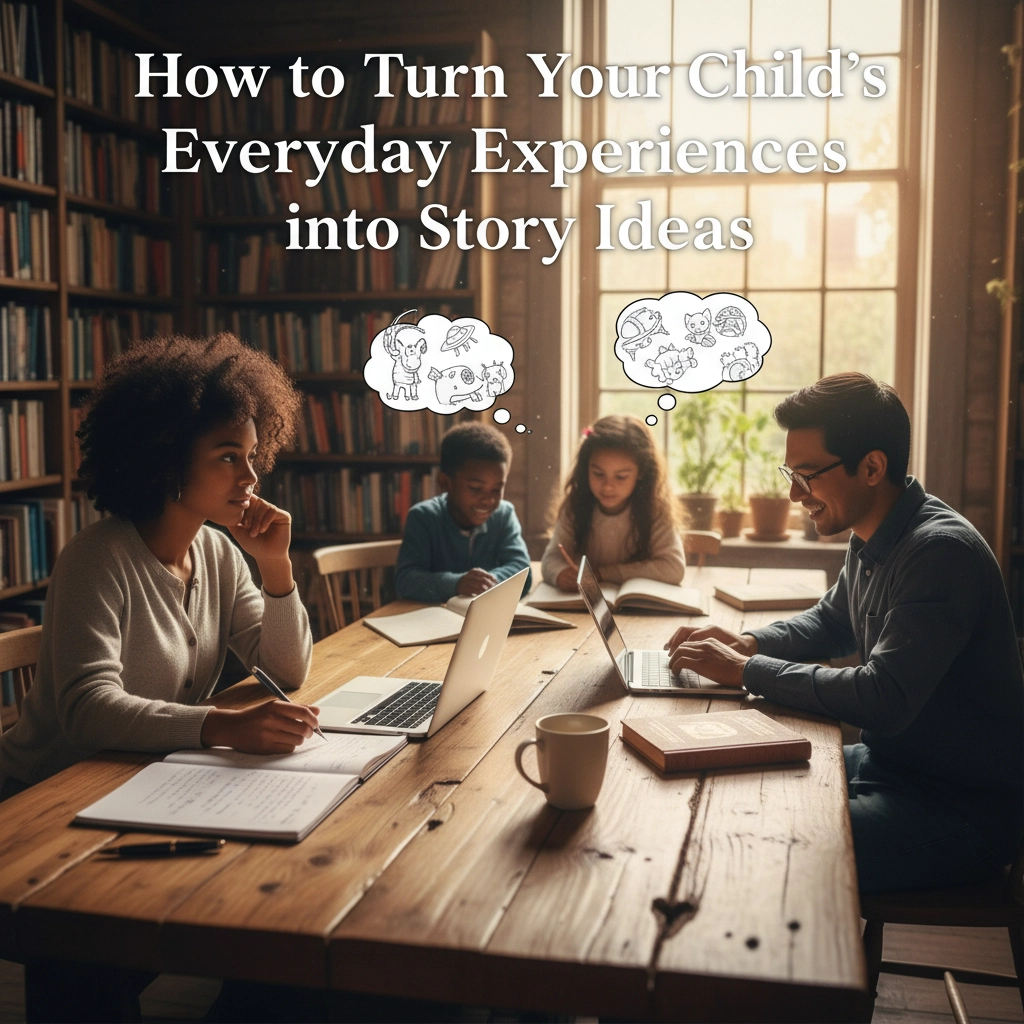
As parents, we often watch our children navigate their daily adventures: from playground drama to family dinner conversations: and marvel at their unique perspectives. What if I told you that these ordinary moments are actually goldmines for creative writing ideas?
Every scraped knee, every argument with a sibling, every trip to the grocery store contains the seeds of compelling stories. The trick is helping your child recognize these story opportunities and transform them into engaging narratives.
Children are natural storytellers, but they don’t always realize it. They live in a world where imagination runs wild, yet they often struggle when faced with a blank page and the dreaded question, “What should I write about?” The solution isn’t to give them more fantastical prompts (though those have their place). Instead, it’s about teaching them to mine their own experiences for story gold.
Start with the power of observation
The first step in turning everyday experiences into stories is teaching your child to become a keen observer. This doesn’t mean they need to become little detectives: it’s simpler than that.
Encourage your child to notice the small details around them during regular activities. When you’re at the park, ask them to describe the interesting people they see. What’s that man with the bright yellow jacket doing? Why does that woman always sit on the same bench? These observations become character studies that can spark entire narratives.
Create a “story spotter” game during family outings. Challenge your child to find three interesting things they’ve never noticed before. Maybe it’s the way the barista at your local café always hums while making coffee, or how the crossing guard waves differently to each child. These details aren’t just random observations: they’re the building blocks of authentic characters and settings.

Transform emotions into story fuel
Here’s something I’ve learned from years of working with young writers: the most powerful stories come from genuine emotional experiences. Your child’s feelings: whether it’s excitement about a birthday party, disappointment over a cancelled playdate, or nervousness about starting a new school: are the foundation for compelling storytelling.
When your child experiences strong emotions, help them explore these feelings through writing. Don’t immediately jump to “write a story about it.” Instead, start with questions:
- How did your body feel when that happened?
- What did you notice around you in that moment?
- What thoughts were running through your head?
These emotional memories become the authentic core that readers connect with, even in fictional stories. A child who remembers the stomach-dropping feeling of forgetting their homework can write a believable character facing any kind of anxiety-inducing situation.
Turn family stories into writing gold
Your family’s everyday moments are actually story prompts for children waiting to be discovered. That time your child got lost in the supermarket? That’s a perfect setup for an adventure story. The day the power went out and you all played board games by candlelight? There’s a cozy mystery waiting to unfold.
Start a family story journal where you collectively record funny, interesting, or memorable moments. Don’t worry about perfect writing: just capture the essence of what happened. Then, during quiet moments, revisit these entries with your child and ask, “What if…?” questions:
- What if the grocery store became a magical maze?
- What if the power outage revealed a hidden treasure in your basement?
- What if the neighbour’s cat could actually talk and was trying to tell you something important?
This “what if” technique is a gateway to creative writing. It takes the familiar and safe (real experiences) and opens the door to limitless possibilities.
Use everyday objects as story starters
Sometimes the best story prompts for children are sitting right on your kitchen counter. That banana that’s getting a bit too ripe? Maybe it’s the key ingredient in a magical potion. The broken umbrella in your closet? Perhaps it once belonged to a weather wizard.
This approach works because children already have a relationship with these objects. They know what a banana feels like, smells like, and tastes like. When they transform it into something magical, they’re building on solid, sensory foundations.
Try the “random object challenge” at home. Put several everyday items in a bag: a wooden spoon, a rubber band, a small toy, a hair clip. Have your child pick three items and create a story that incorporates all of them. You’ll be amazed at the creative connections they make.

Capture conversations and dialogue
Children are surrounded by fascinating dialogue every day, from overheard phone conversations to playground negotiations. Teaching them to pay attention to how people actually speak is a crucial skill for any writer.
Encourage your child to listen for interesting phrases, unusual word choices, or funny misunderstandings. Maybe their little brother mispronounces words in adorable ways, or their grandmother has unique expressions. These authentic speech patterns make fictional characters come alive.
Practice “dialogue collecting” during family car rides. When someone says something particularly funny, memorable, or characteristic, have your child jot it down (or remember it for later). Over time, they’ll build a collection of real speech patterns that can breathe life into their fictional characters.
Build stories from school experiences
School life is rich with story material: from classroom dynamics to cafeteria adventures to playground politics. Help your child see their educational experiences as narrative goldmines rather than just daily obligations.
Did something embarrassing happen during a presentation? That’s character development material. Was there drama during group work? Perfect conflict for a story. Did they discover something fascinating in science class? That’s world-building inspiration.
The key is helping your child step back from the immediate emotions of school experiences and see them as universal human situations that readers can relate to, regardless of age.
The benefits go beyond creative writing
When children learn to transform their experiences into stories, they’re developing skills that extend far beyond creative writing for kids. They’re learning to:
- Process emotions and experiences in a healthy way
- Develop empathy by considering different perspectives
- Improve their observation and listening skills
- Build confidence in their unique voice and viewpoint
- Enhance their problem-solving abilities through plot development
These benefits make the practice valuable whether or not your child becomes a professional writer. They’re learning to see their life as meaningful and story-worthy, which builds self-confidence and emotional intelligence.
Making it a family practice
The most successful young writers I work with come from families that value storytelling as a regular part of life. This doesn’t mean you need to become professional storytellers yourselves: just that you recognize and celebrate the stories in your everyday experiences.
Consider starting weekly “story circles” where family members share interesting moments from their week and brainstorm how they could become fictional narratives. Make it fun and pressure-free. The goal isn’t to produce publishable work: it’s to develop the habit of seeing life through a storyteller’s eyes.
When to seek additional support
While these home practices are powerful, some children thrive with more structured guidance. If your child shows particular interest or talent in creative writing, consider exploring additional resources like a writing class for kids or working with a kids writing coach.
Professional creative writing courses can provide the technical skills and peer interaction that complement your home storytelling practice. They offer structured feedback, genre exploration, and the motivation that comes from being part of a community of young writers.
Ready to help your child unlock their storytelling potential? The everyday moments you’re already experiencing together are the perfect starting point. If you’d like more structured support for your young writer, I’d love to help them develop their craft through our Creative Writing Club or discuss how one-to-one coaching might benefit their unique creative journey. Sometimes having an experienced kids writing coach can make all the difference in helping a child find their voice and confidence as a writer.