
Every time I see a child scribble their first story, eyes bright with possibility, I’m reminded why nurturing young storytellers isn’t just important, it’s essential. Many young writers are walking around with entire worlds in their heads, and our job is to give them the tools to share those worlds with the rest of us.
At Accomplish Press, we’ve made it our mission to do exactly that. But nurturing the next generation of storytellers isn’t just about teaching kids to write pretty sentences (though that’s part of it). It’s about fostering creativity, building confidence, and showing young minds that their stories matter.
Why young storytellers need our support
The world can be pretty quick to shut down a child’s imagination. “That’s not realistic,” we say. “Focus on your math homework instead.” But here’s what I’ve learned from years of working with writers: those wild, impossible stories children tell are often the seeds of the most powerful narratives.
Young storytellers face unique challenges:
- Fear of judgment: Kids are naturally vulnerable to criticism, and one harsh comment can silence a budding writer for years
- Lack of structure: Raw creativity is wonderful, but without some guidance, many young writers get frustrated and give up
- Limited audience: Children need readers who understand their work and can provide constructive feedback
- Resource gaps: Not all families have access to quality writing programs or publishing opportunities
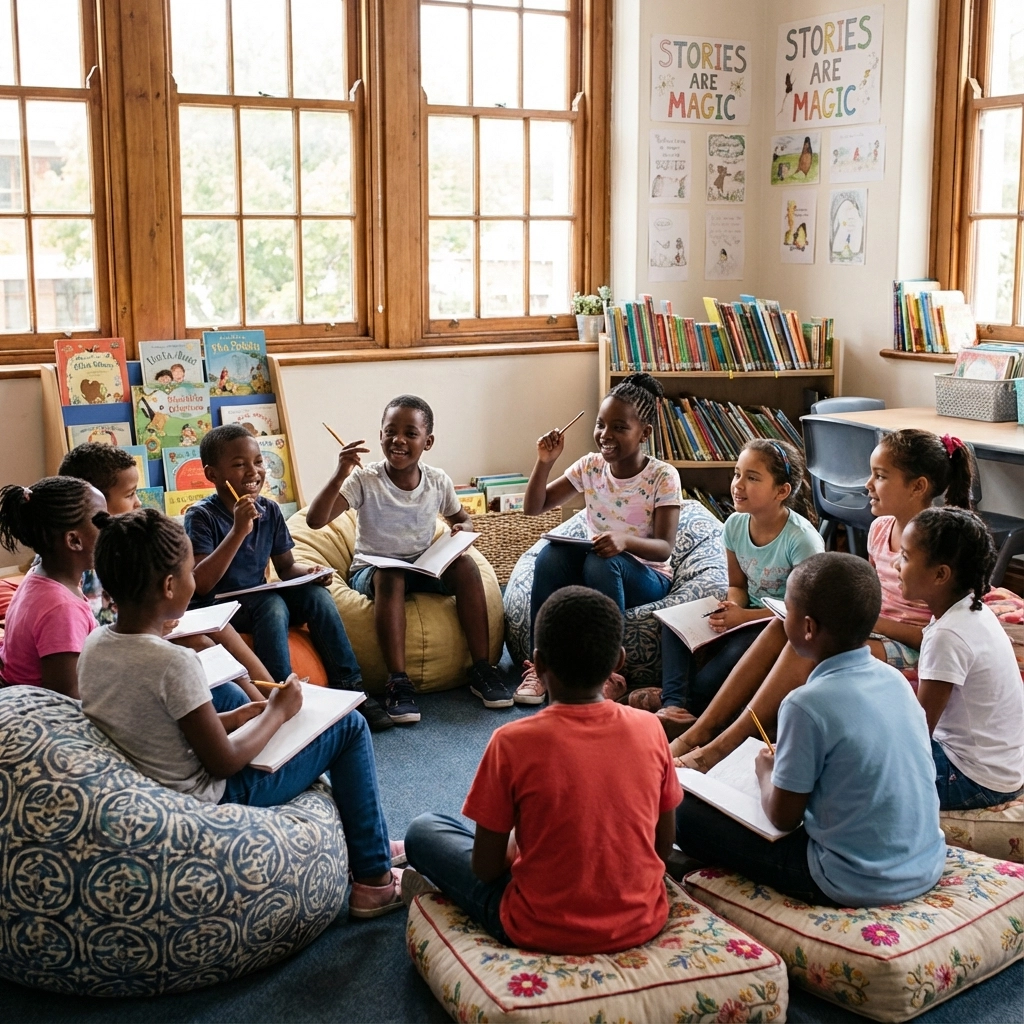
That’s where writing mentors like us step in. We’re not trying to turn every child into the next Shakespeare (though wouldn’t that be something?). We’re providing safe spaces where young voices can grow and flourish.
Our Creative Writing Club: where magic happens
Our Creative Writing Club for Kids and Teens is honestly one of my favourite parts of what we do. A class of 9 to 15-year-olds, all completely absorbed in their notebooks, occasionally bursting out with “Oh! I just had the best idea!”
The club meets weekly (Saturdays and Sundays), and we’ve structured it to be both fun and educational. Here’s how it works:
Story circles: We start each session with story sharing. Kids read excerpts from their current projects or last week’s homework, and the group provides supportive feedback. The rule is to always lead with something positive.
A new creative writing lesson: The students learn a new concept, such as how to create interesting characters or how to use flashbacks or cliff-hangers in their story. These are followed up with examples and short practical exercises.
Writing prompts and challenges: We provide creative prompts that spark imagination. Last month, we challenged the kids to write a story set in the future. The results were hilarious and surprisingly insightful.
Publishing some student’s work: Throughout the year, we select the best stories and essays from our club members to publish on our blog (check out some of them!) There’s nothing quite like seeing your work published and our students love it! We plan to publish some of the best stories in a paperback book soon, which would be awesome.
Interactive quizzes on creative writing and literature: We regularly have a quiz where we test the student’s knowledge of writing and things they’ve learnt during the term. These are very lively and fun, and often get quite competitive!
Individual coaching: personalized support for young writers
Not every young writer thrives in group settings, and that’s perfectly okay. Our kids’ writing coaching programme (after school and weekends) offers one-on-one support tailored to each child’s needs and interests.
I remember working with an 11-year-old who was convinced she was a terrible writer because her teacher had criticized her creative story for “being too imaginative.” After just a few sessions of encouragement and gentle guidance on structure, she was writing with confidence again. She’s now working on her second short story collection.
Our coaching approach focuses on:
- Celebrating creativity first: We start by honouring what the child is trying to express.
- Building fundamental skills: Grammar and structure come naturally when kids are excited about their stories.
- Goal setting: Whether it’s finishing their first chapter or preparing for a writing competition, we help kids set achievable targets and work towards them.
- Personal projects: Children in one-to-one sessions have the space to focus solely on a specific project. I have one student working on a short story collection, another working on a novel, and one creating an exciting series.
- Publishing preparation: For kids ready to take that next step, we guide them through the publishing process.
You can read testimonials and reviews from happy parents on our Google page 🙂
Supporting children’s publishing dreams
Here’s something that might surprise you: children can and should publish their work. Not because every 10-year-old is going to write a bestseller, but because the act of publishing: seeing their name on a cover, sharing their work with the world: is incredibly empowering.
We’ve helped young writers navigate the publishing process, from self-publishing their first picture books to submitting to literary magazines that accept young writers. The process teaches them about:
- Professional communication
- Meeting deadlines
- Handling feedback and rejection
- The business side of writing
One of our former club members, now 16, recently had her short story accepted by a national teen magazine. But what I’m most proud of isn’t the publication itself: it’s watching her develop the resilience and professionalism that will serve her whether she becomes a writer or pursues any other career.
How parents can nurture storytellers at home
Parents often ask me what they can do at home to support their young writers. My answer is always the same: be their first and biggest fan.
Here are some practical ways to nurture storytelling at home:
Read together regularly: It sounds obvious, but reading with your child exposes them to different narrative styles and genres. Ask questions about the stories you read together.
Encourage storytelling in daily life: Car rides are perfect for collaborative storytelling. Start a story and let your child continue it.
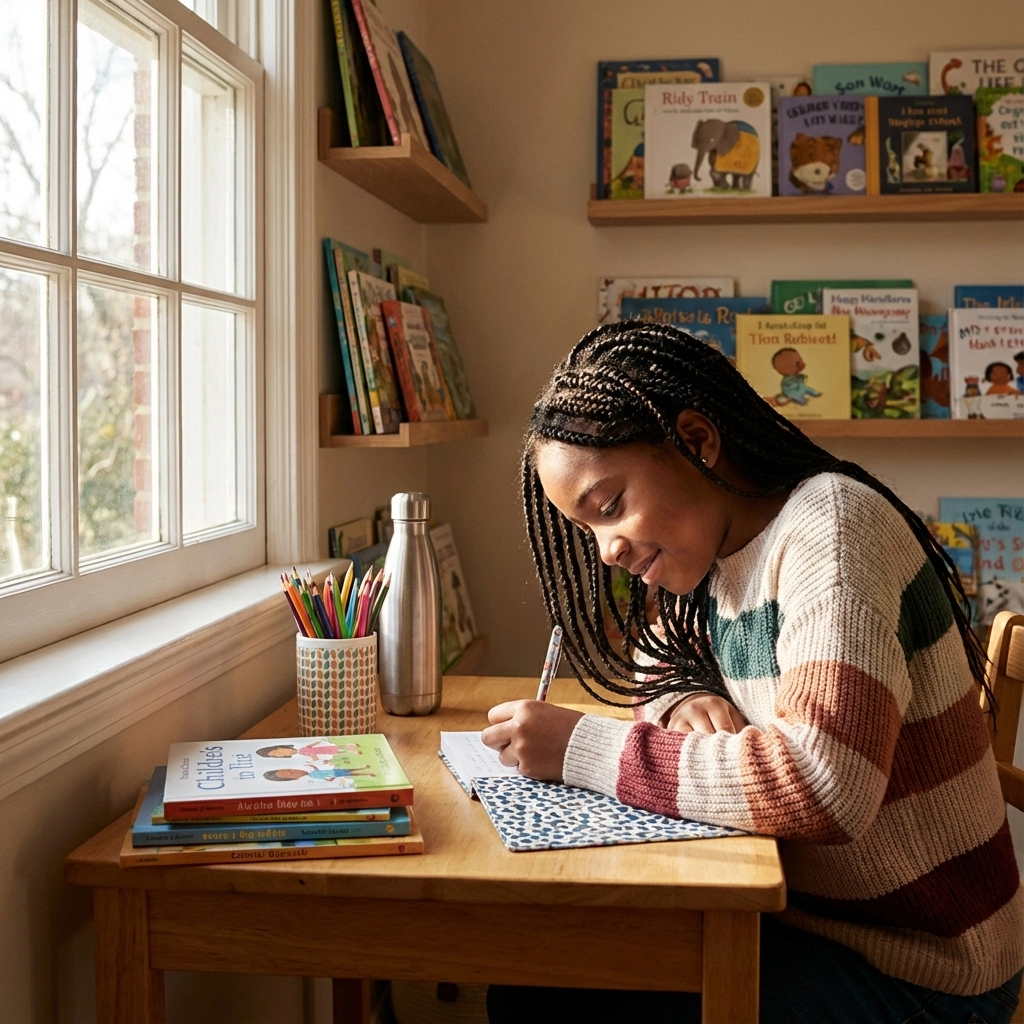
Create writing spaces: It doesn’t have to be elaborate: a special notebook and a quiet corner can work wonders.
Celebrate all attempts: Whether it’s a two-sentence story or a twenty-page epic, show enthusiasm for their creative efforts.
Don’t focus on perfection: Remember, the goal is to foster love for storytelling, not to create perfect prose (that comes later, trust me).
Ask about their stories: Show genuine interest in the worlds they’re creating. Ask follow-up questions about their characters and plots.
The ripple effect of supporting young writers
When we invest in young storytellers, we’re not just creating future authors (though that would be wonderful). We’re raising humans who can communicate effectively, think creatively, and empathize with others through the power of narrative.
Many of our former club members have gone on to pursue careers completely unrelated to writing, but they all carry with them the confidence and communication skills they developed through storytelling. One is now studying medicine and credits her writing experience with helping her communicate with patients. Another is pursuing engineering but uses storytelling techniques in his presentations.

Getting started: simple steps for new young writers
If you have a young storyteller in your life, here’s how to get them started:
- Start small: A single page story is perfectly fine.
- Focus on what they love: Dinosaurs? Fairies? Video games? Those can all be great starting points.
- Make it social: Share stories with family and friends.
- Keep it fun: The moment it becomes a chore, you’ve lost them.
- Celebrate progress: Every completed story is worth celebrating.
Looking forward: the future of young storytellers
The future looks bright for young storytellers. Digital platforms have created new opportunities for sharing stories, from blogs to social media to online publishing platforms designed specifically for young writers.
At Accomplish Press, we’re constantly evolving our programs to meet the changing needs of young writers. We’re exploring digital storytelling workshops, and partnerships with schools to bring creative writing into more classrooms.
But here’s what won’t change: our commitment to providing safe, supportive spaces where young voices can flourish. Because every child deserves to know that their story matters.
Ready to support a young storyteller in your life? Whether you’re looking for one-to-one coaching to help a budding writer develop their skills, or you’d like to enrol them in our Creative Writing Club, I’m here to help. As someone who’s dedicated my career to nurturing creative voices, I understand the unique needs of young writers and the incredible potential they hold. I’ve seen countless children gain confidence, improve their problem-solving skills, and discover a love of learning through our structured yet creative approach. Registration for January term is now open! Click here to register your child now.
Contact me to learn more about our children’s writing programs, or if you’re an adult looking to rediscover your own storytelling voice, consider joining my Creative Writing Course. Let’s work together to keep the next generation of stories alive and thriving!