New writers: how to build a writing routine that sticks

When you decided you were going to take your writing seriously, you probably tried to start a writing routine. Maybe you lasted a week. Maybe two weeks if you were really motivated. Then life happened, you missed a day, felt guilty, and gave up entirely.
Self-publishing vs traditional publishing: which is better for your first book?

So you’ve finally finished your manuscript – congratulations – that’s already a huge achievement! Now you’re staring at the big question: should you go the traditional publishing route or take the self publishing plunge? I get asked this question all the time in my writing coach sessions, and honestly, there’s no one-size-fits-all answer. It really depends on your goals, your budget, your timeline, and your tolerance for uncertainty and hard work.
Why creative writing should be in every school curriculum

Creative writing is not just some “nice-to-have” elective that gets cut when budgets tighten. Creative writing should be as fundamental to education as math and science.
How self-publishing empowers writers (and what you need to know to succeed)

There has never been a better time to be a writer, especially a self-published one. Gone are the days when your only path to becoming a published author involved years of rejection letters, hunting for literary agents, and hoping a traditional publisher would take a chance on your work.
How to navigate the process and realities of finding a literary agent

Finding a literary agent requires patience, strategic thinking, and thick skin. The process can feel arbitrary and unfair, and honestly, sometimes it is. But understanding how it works gives you the best possible chance of success.
What is an author platform and how to build one

An author platform is your ability to reach and sell books to people because of who you are or who you can reach. It’s not just about having a fancy website or thousands of Instagram followers: it’s about building genuine connections with readers who actually care about your work.
Why parents should embrace their child’s weird story ideas

Research shows that when children craft their own narratives, no matter how unconventional, they encounter situations that demand unique vocabulary, sentence structures, and creative problem-solving.
Want to Self-Publish Your Book? Here’s Why You Need an Editor
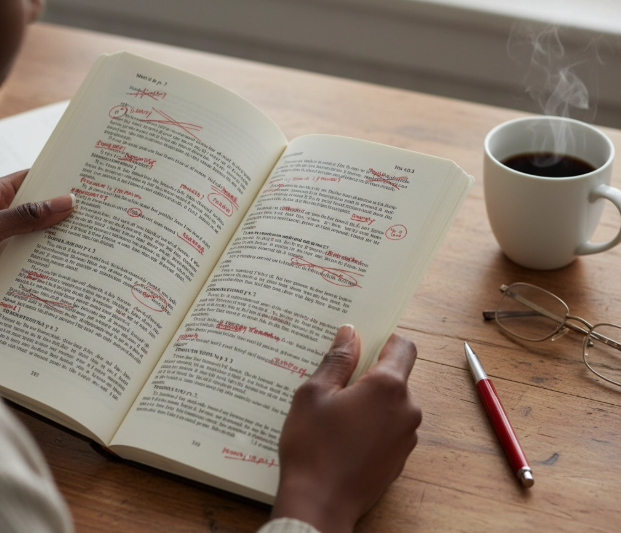
When you’ve poured your heart into your manuscript, spent months (maybe years) crafting every scene, the idea of handing it over to someone else for critique feels terrifying. But every writer needs to accept this: you cannot effectively edit your own work. I don’t care how many writing courses you’ve taken or how many books you’ve read: you’re too close to your own story to see its problems clearly.
Debunking the “Natural Talent” Myth Aspiring Writers Believe

The “natural talent” myth is probably the biggest load of nonsense holding back aspiring writers today. Researchers have been studying this for decades, and the evidence is crystal clear: talent is developed, not inborn.
How to Support Your Young Author: Practical Steps for Parents

Supporting a young writer isn’t about becoming their editor-in-chief or their biggest critic. It’s about creating space for their creativity to flourish while giving them the tools and confidence they need to keep going. And trust me, there will be moments when they need that encouragement.