
What if I told you that one simple addition to every school curriculum could boost students’ test scores, improve their emotional intelligence, enhance their communication skills, and prepare them for future careers, all at the same time?
That addition is creative writing, and it’s not just some “nice-to-have” elective that gets cut when budgets tighten. Creative writing should be as fundamental to education as math and science, and I’m about to show you why.
The academic powerhouse you didn’t expect
Let’s start with something every parent and educator cares about: academic performance. When students engage in creative writing, something magical happens to their brains. They’re not just putting words on paper, they’re solving complex problems, thinking critically, and strengthening neural pathways that benefit every other subject.
Think about it: when a young writer creates a story, they have to invent characters with believable motivations, construct plots that make sense, and resolve conflicts in creative ways. That’s advanced problem-solving disguised as fun. These same analytical thinking skills transfer directly to mathematics, science, and social studies.
Students who participate in regular creative writing exercises consistently perform better on standardized tests. Why? Because creative writing strengthens the core skills that these tests measure: the ability to organize thoughts, express ideas clearly, and think critically under pressure.
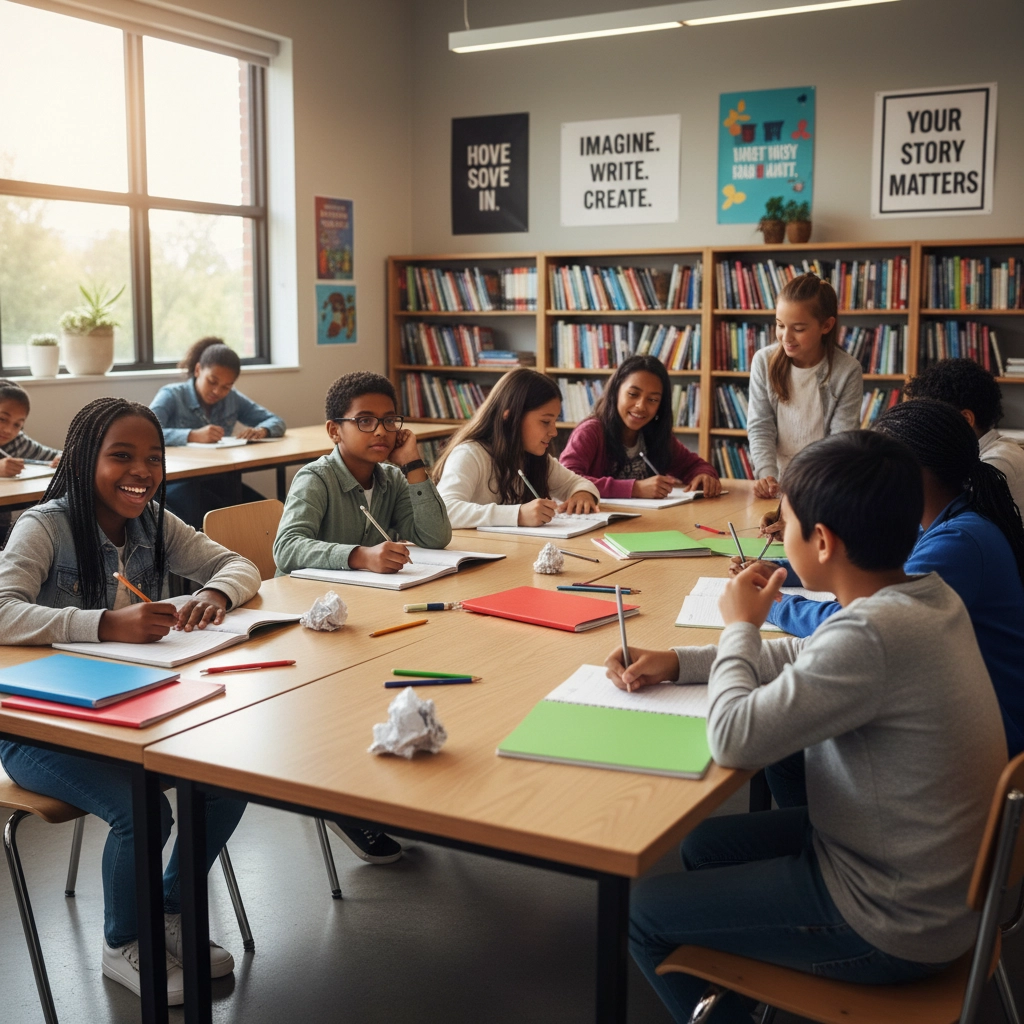
The cross-curricular benefits are equally impressive. When students write historical fiction from different perspectives, they gain deeper understanding of historical events. When they create stories explaining scientific concepts, they master complex ideas while having fun. It’s like getting two subjects for the price of one, except both subjects become more engaging and memorable.
Building emotional intelligence one story at a time
Here’s something schools often struggle to teach: emotional intelligence. In our current educational climate, where student mental health is a growing concern, creative writing offers a powerful solution that’s been hiding in plain sight.
Creative writing provides students with a safe space to explore and process emotions. When a student writes about a character facing challenges similar to their own, they’re essentially practicing emotional problem-solving in a low-risk environment. They can explore different responses, imagine various outcomes, and develop emotional regulation skills, all through storytelling.
I’ve seen shy students find their voice through creative writing, anxious students work through their fears on paper, and struggling students discover they have valuable stories to tell. There’s something deeply therapeutic about transforming personal experiences into fiction, and it’s a skill that serves students well beyond their school years.
Communication skills that transfer to real life
Creative writing really shines here: building communication skills that students will use for the rest of their lives. Unlike essay writing (which has its place), creative writing teaches students to engage their audience, tell compelling stories, and communicate with clarity and impact.
When students share their creative work, whether it’s reading aloud in class or participating in a writing class for kids, they develop confidence in verbal communication too. They learn to present their ideas, handle feedback, and connect with audiences. These are exactly the skills employers are desperately seeking in new graduates.
The freedom that comes with creative writing is crucial here. Unlike other assignments where there’s a “right answer,” creative writing allows students to experiment, take risks, and develop their unique voice. This experimentation builds confidence that carries over into all forms of communication.
Preparing students for an innovation-driven future
The world our students are entering is changing faster than ever, and the jobs they’ll have might not even exist yet. What they’ll need most is the ability to think creatively, adapt quickly, and solve problems in innovative ways.
Creative writing develops exactly these skills. When students imagine worlds beyond reality, create unique characters, and invent solutions to fictional problems, they’re exercising their innovation muscles. They’re learning to think outside the box, approach challenges from multiple angles, and come up with original solutions.
This isn’t just theoretical, employers consistently rank creativity and adaptability among their most desired skills. Students who engage in creative writing develop an innovative mindset that serves them well in any career, from technology to business to healthcare.
Busting the myths that hold schools back
Despite all these benefits, I still hear the same myths that keep schools from embracing creative writing:
Myth #1: “It’s not practical, students need ‘real’ skills.”
Reality check: Creative writing develops critical thinking, communication, problem-solving, and emotional intelligence. These are real skills, and they’re exactly what employers want.
Myth #2: “It takes too much time away from core subjects.”
Creative writing actually enhances core subjects. Students who write creatively show improved performance across the curriculum because writing strengthens cognitive abilities that transfer to all learning.
Myth #3: “Only ‘creative’ kids benefit from it.”
Every student has stories to tell and can benefit from creative writing. Some might write adventure stories, others might prefer realistic fiction, and some might discover they love science fiction. The beauty of creative writing is that it meets students where they are.

Myth #4: “Teachers don’t have the training to teach it.”
This is where support comes in, and it’s totally solvable. Teachers can learn to facilitate creative writing classes, and there are excellent online writing courses and resources available to help them get started.
Real success stories that prove the point
I’ve seen the transformative power of creative writing first-hand through my Creative Writing Club for Kids and Teens. Students who start the program struggling with confidence often leave as eager storytellers who can’t wait to share their work.
Take Maria, a quiet seventh-grader who barely spoke in class. Through creative writing, she discovered she had a talent for creating compelling characters and intricate plots. Not only did her writing skills improve dramatically, but her confidence soared. She started participating more in other classes and even joined the school newspaper. Her English teacher noticed significant improvement in her analytical essays too, because creative writing had taught her to think about audience, purpose, and structure.
Or James, a student who struggled with traditional writing assignments. Creative writing allowed him to channel his energy and imagination into storytelling. His grades improved across subjects, and he developed better focus and self-regulation skills. Most importantly, he rediscovered his love of learning.
These aren’t isolated cases, they’re the norm when schools embrace creative writing as a core component of education. I hear these kind of testimonies from the parents of my students all the time.
Supporting teachers and parents in this mission
The good news is that integrating creative writing into school curricula doesn’t require a complete educational overhaul. Teachers need support and resources, yes, but the framework already exists in most schools.
For teachers who feel unprepared to teach creative writing, there are excellent professional development opportunities available. Many online writing courses are designed specifically for educators, providing both the skills and the confidence needed to guide student writers.
Parents can advocate for creative writing in their children’s schools by speaking with teachers and administrators about the benefits. They can also support their children’s creative writing at home by encouraging storytelling, providing writing materials, and celebrating their child’s creative efforts.
Working with a kids writing coach can also provide additional support for students who want to develop their skills further. Whether through individual coaching or group classes, having an experienced guide can accelerate a student’s growth and confidence as a writer.
Ready to champion creative writing in your school or support your child’s writing journey? Whether you’re a teacher looking to integrate creative writing into your classroom, a parent wanting to nurture your child’s storytelling abilities, or an educator seeking professional development, I’m here to help.
As a parent, you can register your child for my Creative Writing Club for Kids and Teens (ages 9 – 15). I also work with schools providing creative writing workshops and programmes that meet students exactly where they are in their writing journey. Together, we can ensure every student has the opportunity to discover the transformative power of creative writing.