
You sit down to write, open your document, and instead of diving into Chapter 6, you find yourself rereading Chapter 1. Again. Before you know it, you’ve spent an hour tweaking the same three paragraphs you “perfected” last week. Sound familiar?
If you’re nodding along, you’re not alone. This is one of the most common writing traps I see in my coaching practice it’s a momentum killer that keeps more manuscripts unfinished than any other single habit.
Most writers edit too early because it feels productive. You’re making words better, right? Wrong. You’re actually sabotaging your progress in ways you probably don’t even realize.
The psychology behind premature editing
What’s really happening when you edit too early? It’s not about making your work better, it’s about fear wearing a perfectionism mask. I see this pattern repeatedly. Writers get stuck in what I call “literary limbo”, that safe space where you can endlessly tinker without ever having to face the scary question: Is this story actually good?
Early editing feeds three psychological traps:
The safety net: Polishing existing words feels safer than writing new ones. You know those pages exist, they’re yours, and improving them gives you a sense of control. Writing new material? That’s diving into the unknown.
Imposter syndrome relief: Every time you make a sentence “better,” you get a tiny hit of validation. See? I can write! This proves I’m a real writer! But you’re not actually progressing toward a finished manuscript.
Procrastination in disguise: This one’s hard to swallow, but it’s true. Editing feels like work, so we convince ourselves we’re being productive. Meanwhile, we’re avoiding the real challenge of creating new content.
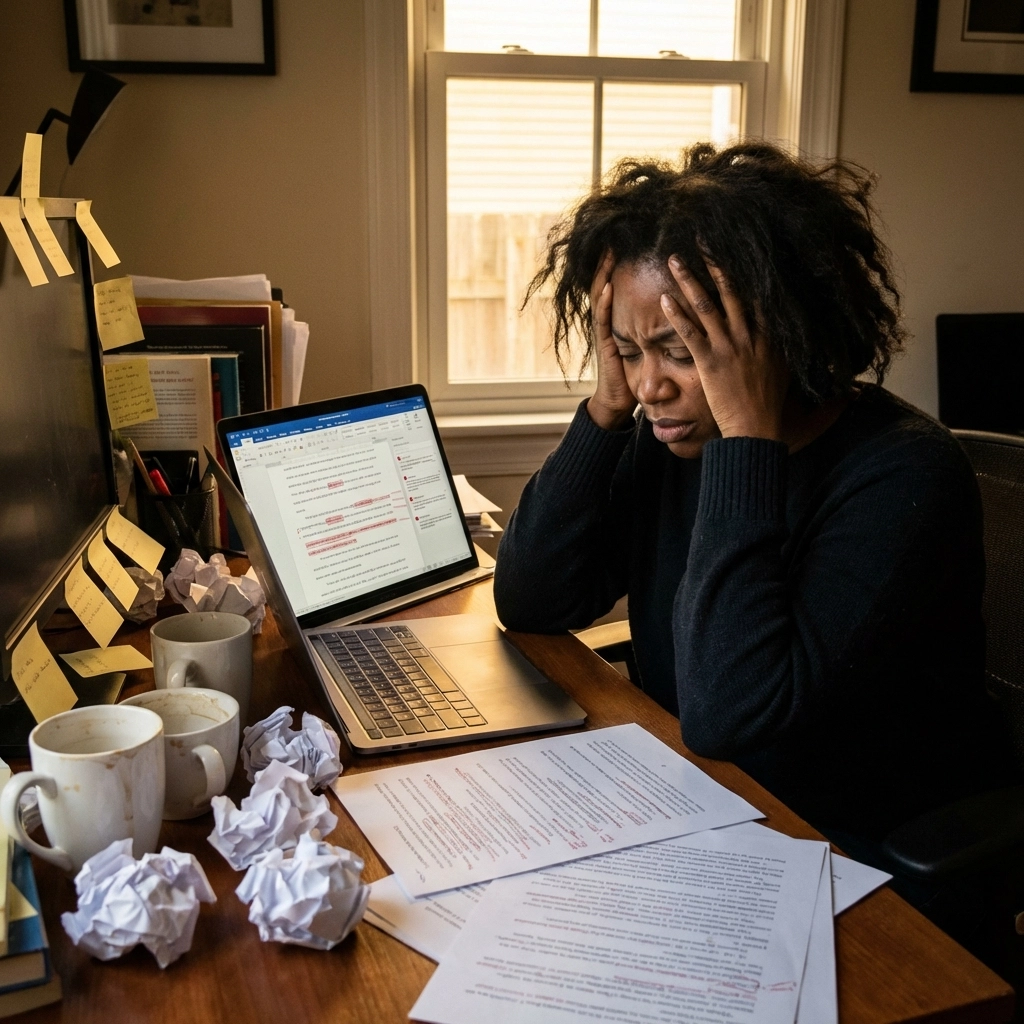
How early editing kills your momentum
Your brain operates in two distinct modes when writing: Creator Mode and Editor Mode. These modes are about as compatible as oil and water.
Creator Mode is expansive, experimental, and messy. It’s where you discover what your story wants to be. Editor Mode is analytical, judgmental, and precise. It’s where you refine what already exists.
When you constantly switch between these modes, you’re basically slamming on the brakes every few minutes during a road trip. No wonder you never get anywhere!
Here’s what really happens when you edit too early:
You kill story discovery
Your subconscious mind is working on your story even when you’re not actively writing. Plot twists, character revelations, and thematic connections often emerge organically as you draft. But when you edit too early, you’re working with incomplete information.
I had a client who spent three months perfecting her opening chapter. Beautiful prose, compelling hook, great pacing. Then, as she drafted the rest of her novel, she realized her original opening didn’t fit the story that actually emerged. Those three months? Completely wasted because she was editing without knowing where the story was going.
You develop “little darling” syndrome
The more time you spend polishing a passage, the more attached you become to it. Writers call these beloved-but-problematic sections “little darlings.” When you’ve spent weeks crafting the perfect opening paragraph, cutting it later becomes emotionally devastating, even when the story demands it.
Your word count flatlines
This is the most obvious momentum killer. If you’re spending your writing time editing instead of drafting, your manuscript doesn’t grow. I’ve seen writers log 10 hours a week for months and have nothing to show for it except a really polished Chapter 1.
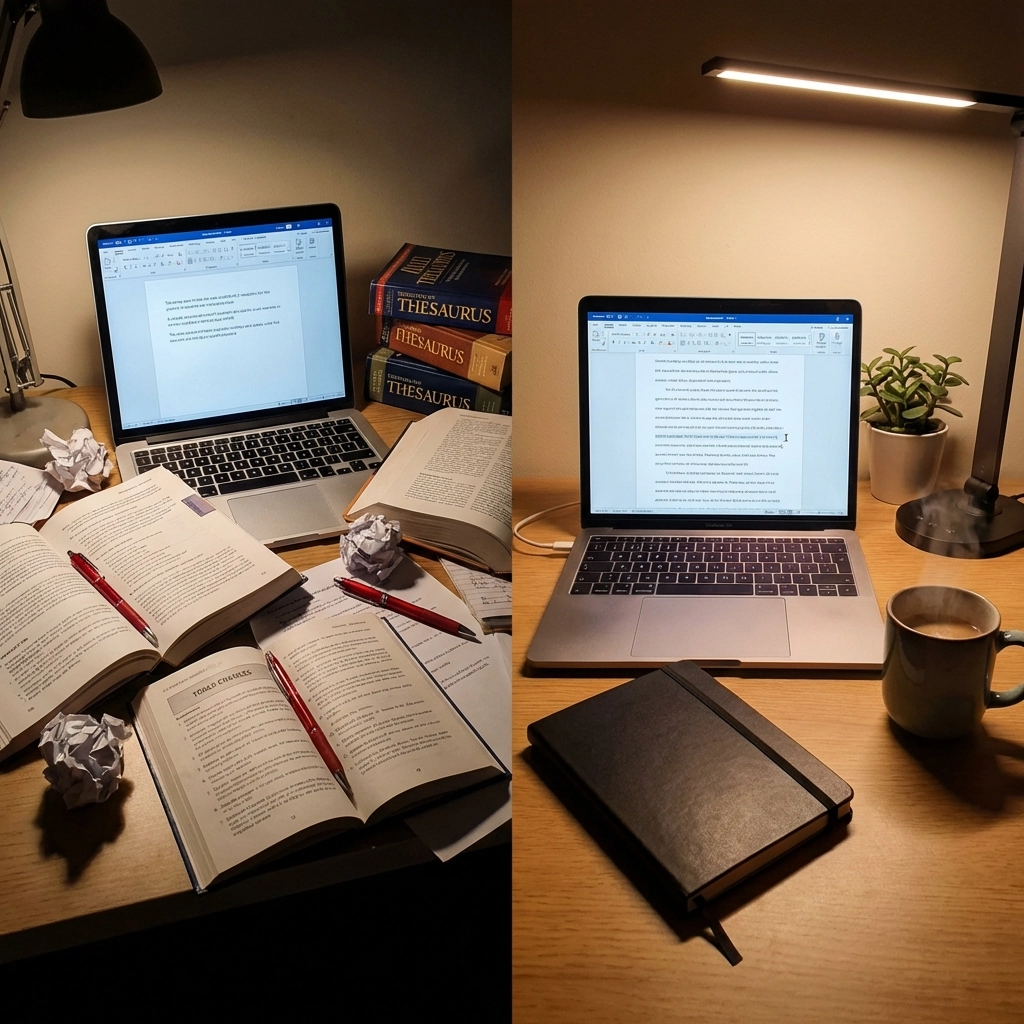
The red flags: are you editing too early?
Take an honest look at your writing habits. Do any of these sound familiar?
- You reread previous chapters before starting each writing session
- You spend more time changing words than adding them
- Your weekly word count stays flat despite putting in hours
- You can recite your opening paragraph from memory
- You’ve revised the same scene more than three times before finishing your first draft
- You research perfect synonyms instead of moving the story forward
If you said yes to three or more, you’re caught in the premature editing trap. But don’t panic, this is fixable.
Practical tips for forward momentum
The solution isn’t complicated, but it does require discipline. Here are the strategies I teach my clients:
The “No Backwards” rule
Simply put: don’t read what you wrote yesterday. Open your document, scroll to the end, and start writing. Period. This single change has rescued more manuscripts than any other advice I give.
Yes, you’ll feel disconnected from your story at first. Yes, you’ll worry about continuity. Trust the process: you can fix these things later, and they’re usually less problematic than you imagine.
Use draft markers
At the end of each writing session, write yourself a quick note: “Tomorrow: Sarah confronts her mother about the letter.” This gives you a starting point without requiring you to reread previous work.
Set word count goals, not quality goals
Your first draft has one job: to exist. Aim for forward progress, not perfection. I tell my clients to think of first drafts like rough sketches: you’re capturing the shape of your story, not creating a finished painting.
Embrace the mess
Messy first drafts often lead to better final manuscripts. When you allow yourself to write badly, you bypass your inner critic and tap into your creative instincts. Some of the best discoveries happen when you’re not trying to be brilliant.
Special advice for young writers
If you’re a young writer reading this, you have a huge advantage: you haven’t developed deeply ingrained editing habits yet. But you’re also facing unique pressures.
School teaches you to write essays that are polished from the start. Creative writing is different. Give yourself permission to write stories that would make your English teacher cringe. Your first draft is for you to discover what you want to say. Your second draft is where you figure out how to say it clearly.
Remember: every published author’s first draft was terrible. The magic happens in revision, but only after you have something complete to revise.

Success stories: what happens when you push forward
One of my favourite success stories involves a writer who came to me with a half-finished novel she’d been “working on” for more than two years. Every week, she’d start by editing her existing chapters. Her manuscript was stuck at 40,000 words.
I challenged her to commit to the “no backwards” rule for one month. Just one month of pure forward momentum. By the end of those four weeks, she’d added 25,000 words: more progress than she’d made in the previous year.
More importantly, she discovered her story was actually about something completely different than she’d originally planned. Those early chapters she’d been perfecting? They got cut entirely in revision. But she couldn’t have known that without writing to the end first.
The bottom line
Your first draft’s job is to exist, not to impress anyone. Every minute you spend editing incomplete work is a minute stolen from finishing your story.
I know this advice goes against every perfectionist instinct you have. It certainly goes against mine: I’m someone who used to revise email subject lines three times before sending. But I’ve learned that momentum beats perfection every single time.
The path to a finished manuscript isn’t through perfect chapters: it’s through completed drafts. You can’t edit a blank page, but you can absolutely edit a messy one.
Give yourself permission to write badly. Your future self will thank you when you’re holding a finished manuscript instead of a beautifully polished fragment.
Ready to break free from the editing trap and finish your manuscript? Whether you’re stuck in Chapter 1 perfectionism or need accountability to keep moving forward, I’m here to help. Whether through one-to-one coaching or my Creative Writing Course, we can build a system that allows you to keep moving forward. Book a call with me to learn more about how I can help you tell the stories that matter to you. I’m here to support your journey from aspiring author to published writer.